Global Perspectives
Students research local and global issues, weigh up different viewpoints, judge the reliability of evidence and learn to communicate and collaborate as informed, responsible global citizens.
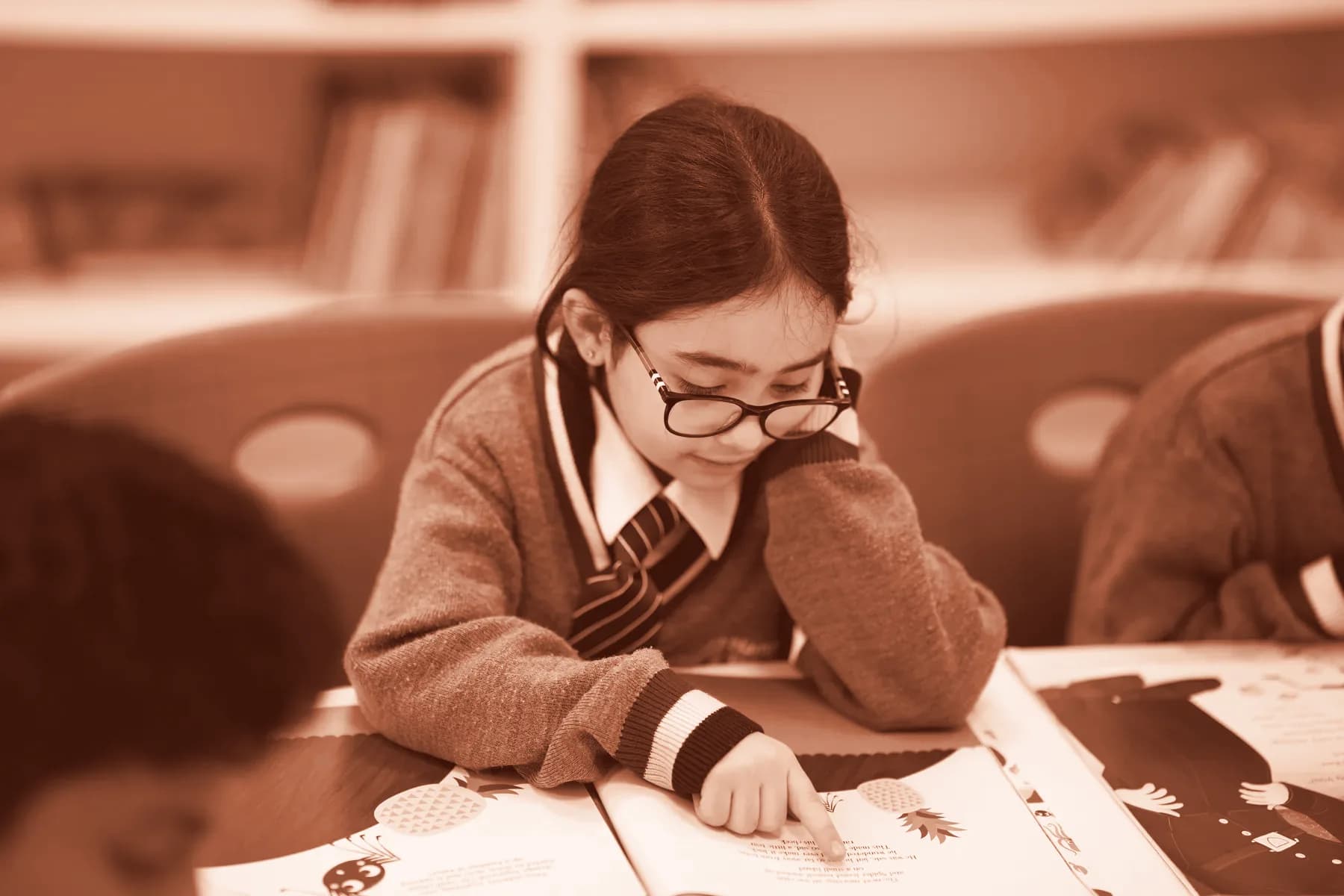
Our curriculum combines the strengths of the British educational approach with the Cambridge International curriculum and the requirements of the UAE Ministry of Education, giving every child a broad, balanced and challenging education from Early Years to Upper Secondary.
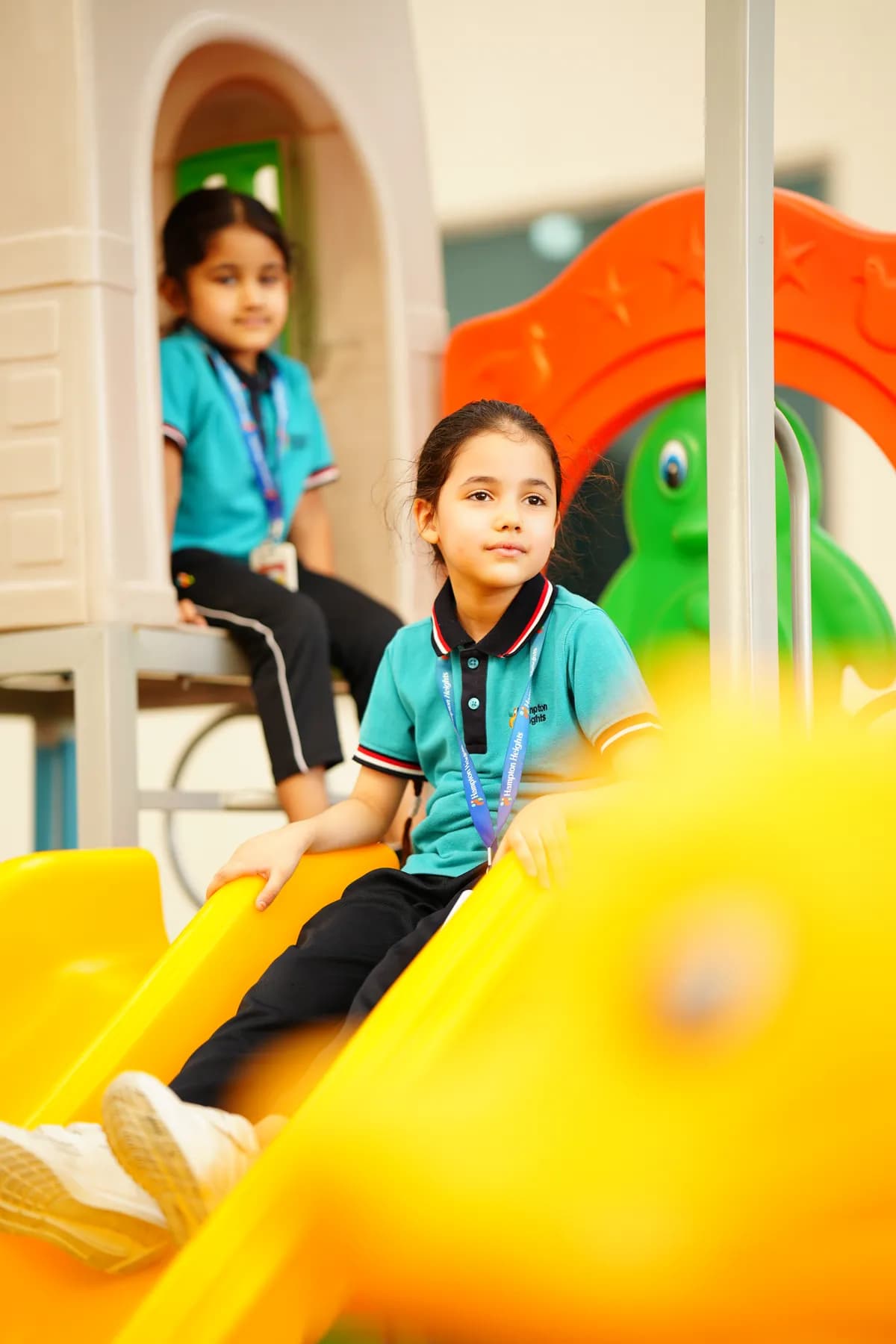
A nurturing, stimulating environment where young children learn through exploration, discovery, play and meaningful experiences. Teachers observe each child closely and plan around their individual needs and stage of development.
Learning happens through structured activities, child-initiated play, role-play, storytelling, songs, practical exploration and outdoor learning.
The move from FS2 to Year 1 is carefully supported so children start primary school confident and ready.
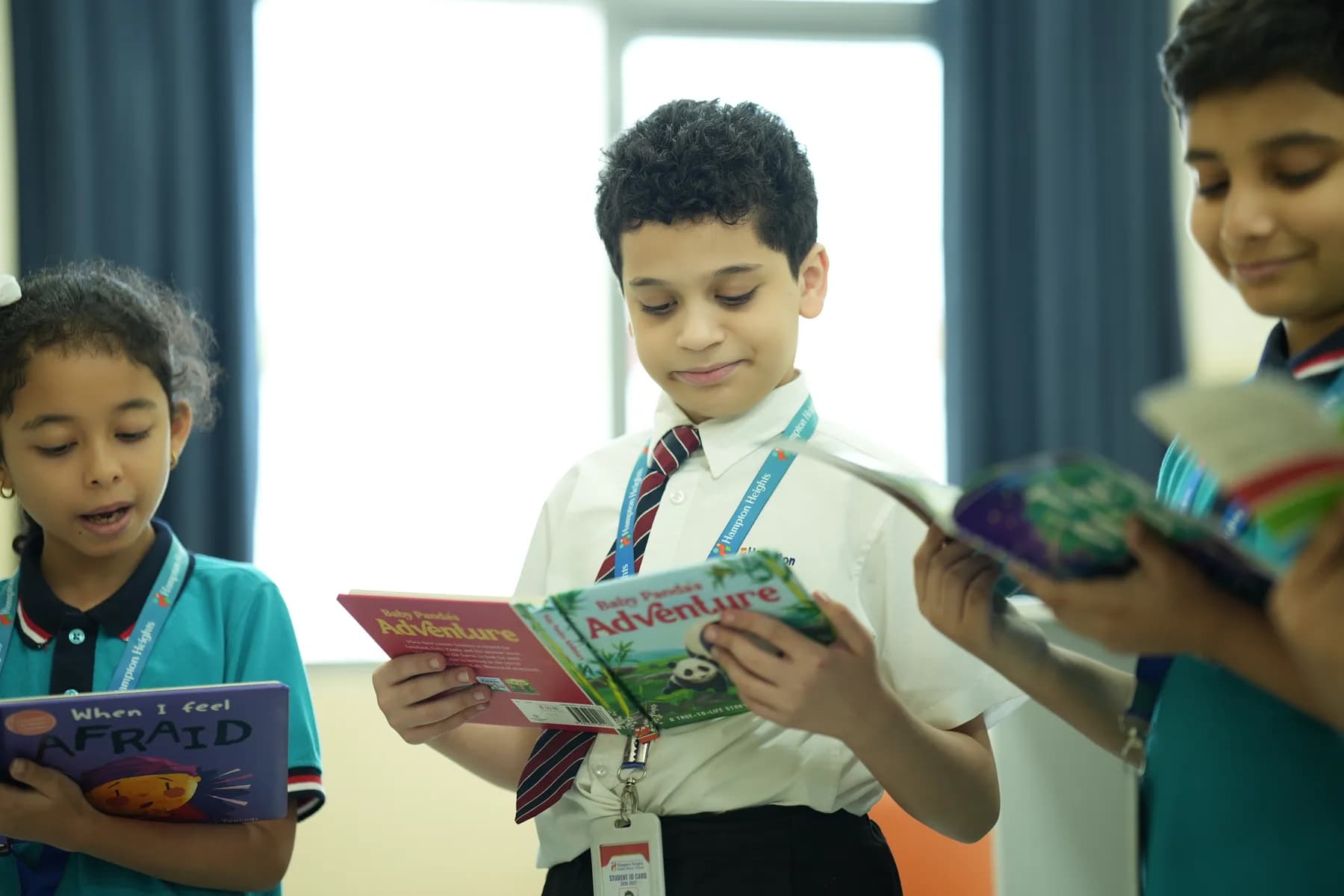
Strong foundations in academic learning, communication, creativity, independent thinking and personal development, following the Cambridge Primary curriculum framework.
Year 1 is a carefully structured step on from EYFS, focused on early literacy, phonics, language and early mathematics.
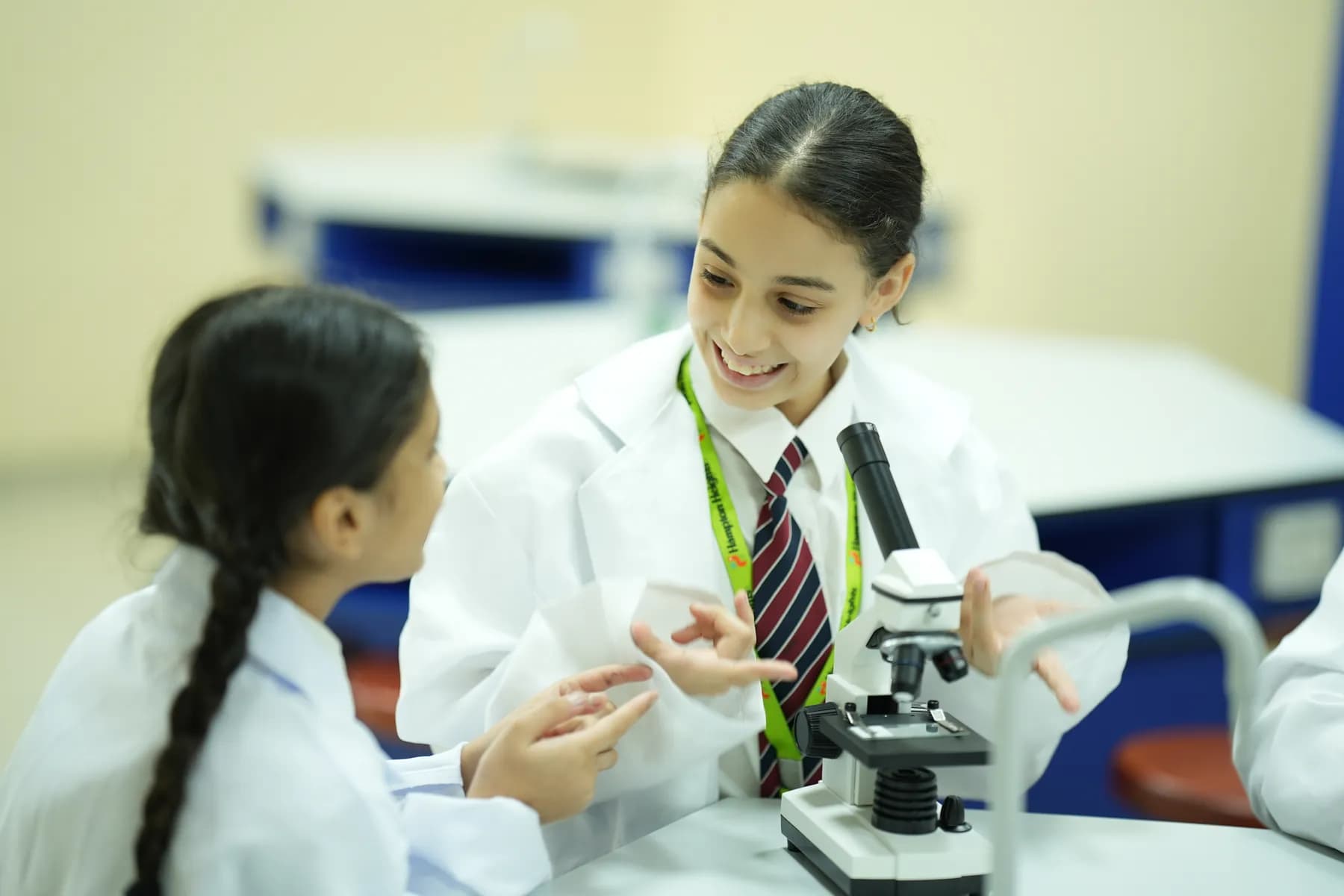
Increasingly challenging and specialised learning that builds on Primary, developing independent thinking, analytical skills and subject knowledge.
Students learn to research, evaluate information and apply their knowledge to real-life situations, ready for the demands of Upper Secondary.
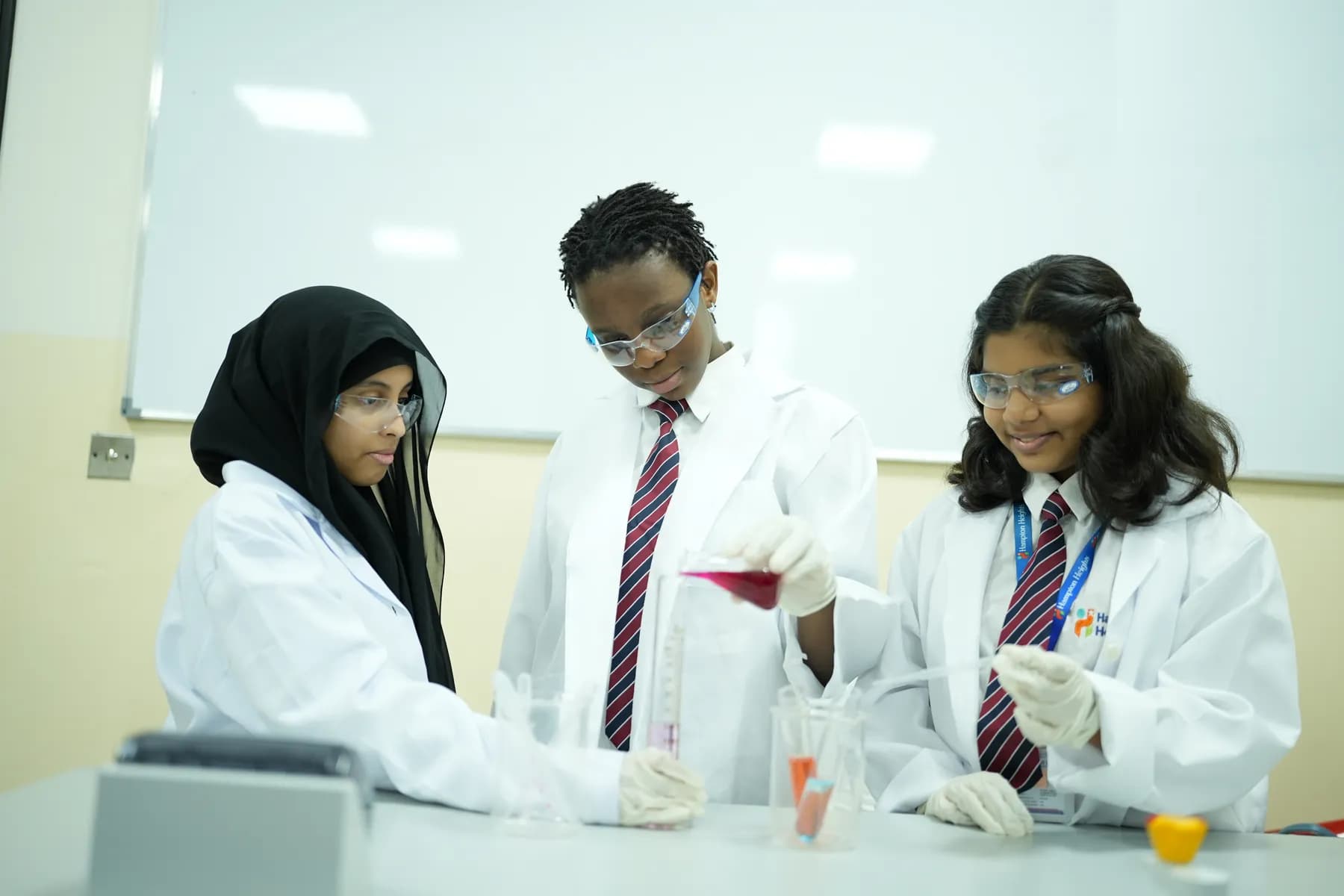
The start of Upper Secondary: advanced subject knowledge, analytical thinking, research skills and study habits, with teaching aligned to Cambridge International syllabus requirements.
Arabic, Islamic Studies and Social Studies follow UAE Ministry of Education requirements. Arab students take the A pathway and non-Arab students the B pathway.
Students research local and global issues, weigh up different viewpoints, judge the reliability of evidence and learn to communicate and collaborate as informed, responsible global citizens.
A second modern language built step by step through listening, speaking, reading and writing, with an appreciation of French-speaking cultures.
Students sit Cambridge Primary Checkpoint in Year 6 and Cambridge Lower Secondary Checkpoint in Year 9, in English, Mathematics and Science.
Teachers use regular formative assessment (classwork, questioning, observation, quizzes, practical work and projects) alongside summative assessment at the end of units and terms, and use the results to give feedback, plan support and extend learning.
| Phase | Formative | Summative |
|---|---|---|
| EYFSFS2 | Continuous developmental assessment | Developmental review |
| PrimaryYear 1 – Year 6 | 70% | 30% |
| Lower SecondaryYear 7 – Year 9 | 60% | 40% |
| Upper SecondaryYear 10 | 60% | 40% |
These are the school's internal weightings. In EYFS, progress is tracked through observation and developmental milestones rather than tests.
Differentiated teaching, flexible approaches, and support or enrichment where it is needed, so every child can access the curriculum and make progress.
Sport, arts and music, student leadership and parliament, competitions, national and international celebrations, and community and environmental projects.
Students learn about the UAE's history, heritage and values through MOE subjects, lessons, school activities and celebrations.
Regular updates on curriculum expectations, progress and assessment, plus parent–teacher meetings through the year.
Extra care at each step up: FS2 to Year 1, Year 6 to Year 7, and Year 9 to Year 10.
See the classrooms in use, meet the teachers and ask us anything. Tours run through the school week and take about forty minutes.